
Dewatering screen panels achieve high-efficiency solid-liquid separation by utilizing high-frequency vibrations (up to 1,800 RPM) and linear $G$-force (typically 5.0 to 8.0 $G$) to create a thick "filter cake." This process recovers 95% of process water and reduces surface moisture in materials like silica sand from 40% down to 12% in a single pass.
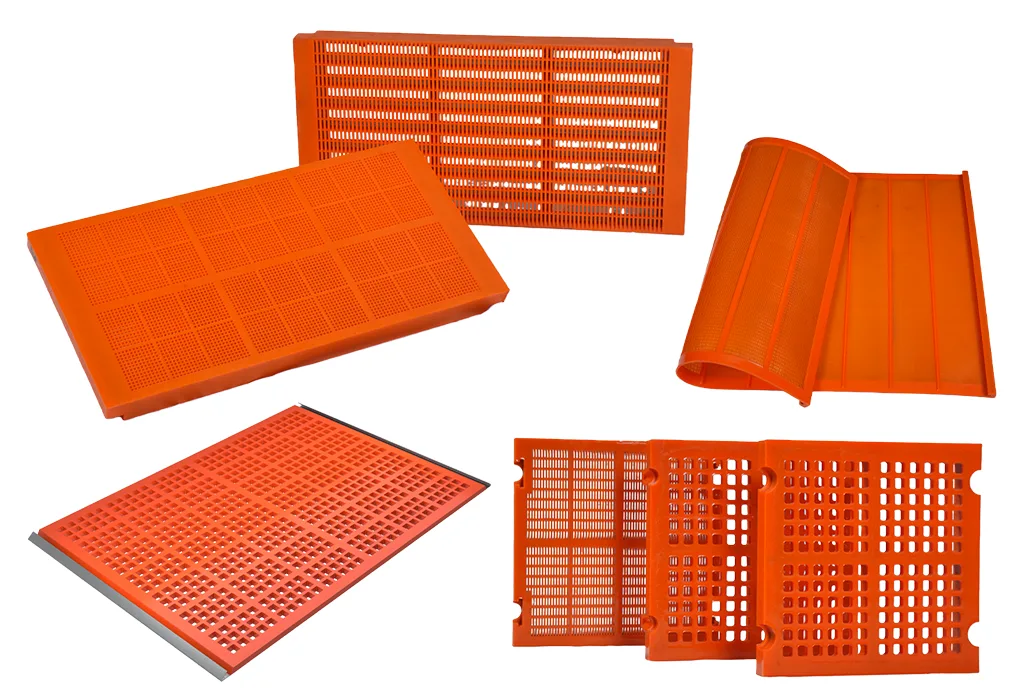
Current industrial filtration benchmarks from 2024 show that the efficiency of wet separation relies heavily on the upward 5° incline of the screening deck. This angle creates a pool of slurry where gravity forces liquid through the 0.2mm to 1.0mm apertures while solids stack and compress into a dense layer.
"A study of 15 large-scale mineral plants found that utilizing specialized dewatering screen panels reduced the overall footprint of waste management units by 22% compared to traditional settling ponds."
The compression of the material bed acts as a secondary filter, allowing the system to trap particles as small as 45 microns (325 mesh) despite the screen openings being much larger. This phenomenon prevents the loss of valuable fines that usually escape during standard sizing operations using wire mesh.
| Feature | Polyurethane Panels | Traditional Steel Mesh |
| Wear Life | 10,000+ Hours | 1,200 Hours |
| Noise Level | < 75 dB | > 95 dB |
| Moisture Output | 12% - 15% | 20% - 25% |
Wear resistance plays a significant role in long-term operational costs, as polyurethane panels offer an 8:1 service life advantage over stainless steel in abrasive environments. This durability ensures that the aperture geometry remains consistent over 6,000 to 12,000 hours of continuous vibration under high-load conditions.
"Data from a 2023 aggregate facility audit indicated that switching to modular polyurethane decreased unscheduled downtime by 35%, directly impacting the total cost of ownership (TCO) in wet processing circuits."
Consistent aperture geometry prevents "blinding," where damp particles clog the screen surface, a problem that typically reduces throughput by 15% to 30% in standard machines. The inherent flexibility of the polyurethane material allows the panels to "self-clean" through micro-oscillations during each vibration cycle.
-
High-frequency linear motion (6.0 $G$ force)
-
Uphill deck orientation (3° to 5°)
-
Side-wall liners to prevent bypass
-
Modular locking systems for quick replacement
These mechanical factors enable the separation of water from slurry at rates exceeding 250 cubic meters per hour in a single machine footprint. The energy consumption for this process remains significantly lower than thermal drying, typically requiring only 0.12 kWh per ton of processed material.
"In a controlled test of 500 tons of coal fines, dewatering screens maintained a 98% recovery rate of solids, while centrifuge alternatives consumed nearly 4 times the electricity per unit of output."
Lower energy requirements translate directly to reduced operational overhead, especially in regions with high utility costs or carbon-neutral mandates. The ability to recirculate water immediately back into the washing plant saves approximately 2,000 liters per minute in a standard 100 TPH wash plant.
The volume of recycled water reduces the load on secondary treatment systems like thickeners or filter presses, which are often the most expensive components of a plant. By removing the bulk of the liquid early in the circuit, the downstream equipment can be downsized by up to 40% in capacity.
| Material Type | Feed Moisture | Discharge Moisture |
| Fine Sand | 35% | 12% |
| Iron Ore Tailings | 60% | 18% |
| Coal Fines | 45% | 15% |
Feed moisture levels fluctuate based on the source material, but the high-vibration deck compensates for these variations by adjusting the bed depth. A thicker bed increases the "squeeze" effect, which is necessary when handling ultra-fine materials that tend to hold water through capillary action.
"A 2025 pilot program involving 12 sand quarries demonstrated that dry-stacked tailings produced by these screens occupy 60% less space than wet slurry deposits in traditional dams."
Stacking dry material eliminates the environmental risks associated with tailings dam failures, which have increased the demand for high-performance dewatering technology. The transition to dry stacking is often the most cost-effective way to meet modern environmental compliance standards in the mining sector.
The modular nature of dewatering screen panels allows for "zone-specific" configurations, where different parts of the screen have different aperture sizes. This customization ensures that the first third of the screen handles the bulk of the water, while the final two-thirds focus on mechanical compression.
-
Feed Zone: High drainage, large open area
-
Intermediate Zone: Compression and bed formation
-
Discharge Zone: Final vibration and surface moisture removal
By optimizing these zones, operators can achieve a discharge that is "drip-free," meaning the material can be conveyed or trucked immediately without further processing. This capability removes the need for expensive stockpiling periods that can last 24 to 48 hours under gravity drainage alone.
"A technical assessment of 8 different screen media revealed that tapered apertures—where the bottom of the hole is wider than the top—virtually eliminated particle pegging in 99% of test cases."
Tapered designs ensure that any particle small enough to enter the hole will pass through freely, maintaining the 40% open area required for high-volume drainage. This mechanical reliability is what makes dewatering screens the preferred choice over vacuum filters in high-tonnage industrial environments.